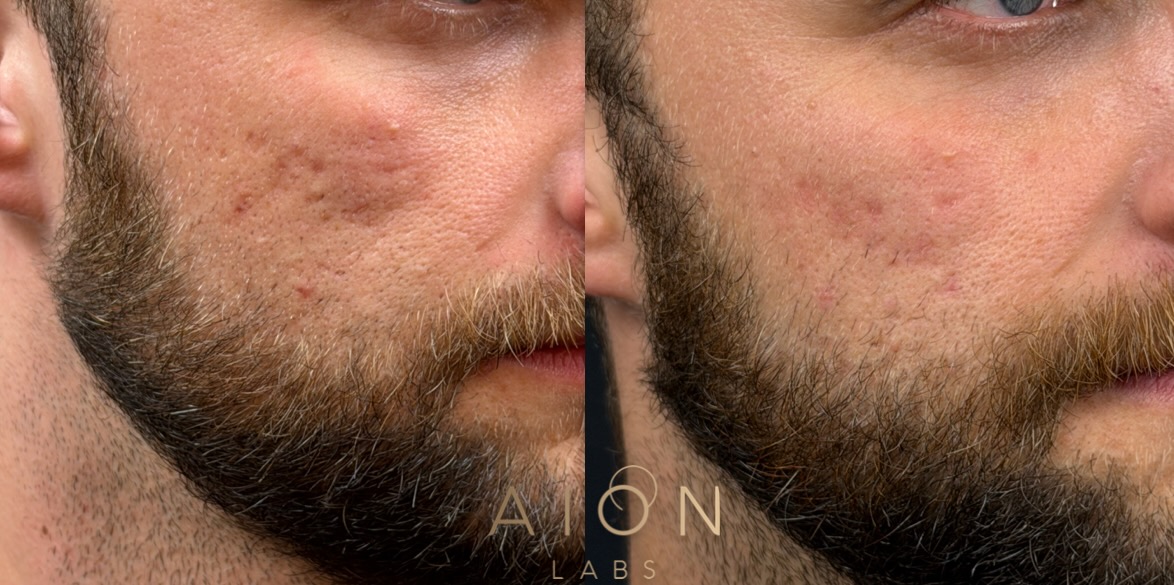
Ablative laser resurfacing removes microscopic layers of skin in a controlled way. As the skin heals, it produces new collagen and remodels itself, which can improve wrinkles, scarring, texture and pigmentation. At Aion Labs, Dr Rob Humphries uses both CO2 and Erbium lasers, in fractional and fully ablative modes, and plans each treatment around your skin and what you want to improve.
At a glance
Ablative lasers vaporise tiny amounts of skin with great precision. This triggers the body’s natural healing, mainly through new collagen production and remodelling of the skin over the following months.
CO2 laser is ideal for deep wrinkles, significant scarring and textural irregularities. It heats the deeper skin as well as removing the surface, which gives a strong tightening effect.
Erbium laser targets fine lines and pigmentation with more precision and typically a shorter recovery. It produces less heat in the surrounding skin, which makes it suitable for a wider range of skin types.
Fractional ablative laser vaporises tiny columns of skin, leaving healthy untreated skin in between. The untreated skin helps the treated areas heal, which means a faster recovery and lower risk of side effects than full ablation. This is mainly used for patients wanting rejuvenation and reduction in sun damage. The downtime is typically 3-7 days.
Fully ablative laser vaporises the whole surface of the skin. Consequently it has worse and longer downtime (7-10 days). It can be used selectively around:
Acne scarring (rolling, boxcar scars) - find out more about acne treatment here
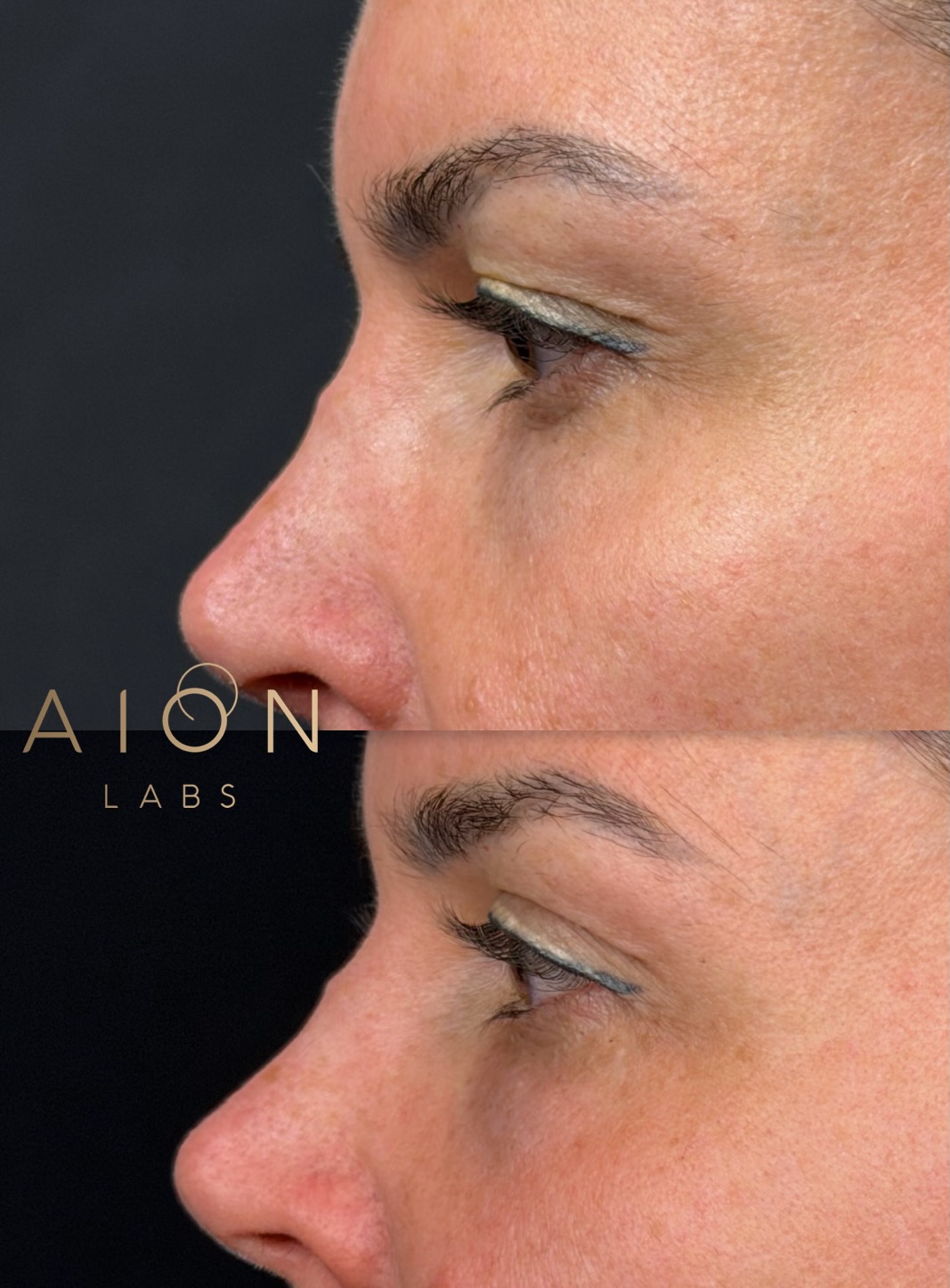
Laser blepharoplasty (for tightening the skin of the upper eyelids - see image below)
Deep etched in lines around the mouth (eg smokers lines)
Sun spots, raised moles, skin tags
Full ablation is recommended for a significant improvement in acne scarring. Many patients have fractional treatment across the whole face, with full ablation focused on the scarred areas in the same session.
Fractional Erbium YAG laser can be used in all skin types. Darker skin types have a higher risk of pigmentation changes after laser, so the skin is prepared for 2 to 4 weeks beforehand with prescribed skincare to reduce this risk. Dr Humphries will assess your skin type at your consultation and plan the safest approach. Even with these precautions, pigmentation may still occur. However, it is important to treat scarring and texture first, and then address colour later.
Consultation. Dr Humphries takes a full medical history, examines your skin and talks through what you would like to improve. He will take photos, confirm your skin type and agree a plan and cost with you. If your skin needs preparing, this will start 2 to 4 weeks before your first session.
Treatment. Numbing cream is applied for around 45 minutes. The laser itself usually takes 30 minutes for a full face.
Aftercare. Your skin will feel hot and look red, similar to sunburn. Keep it moisturised with the products provided, and avoid make-up for 5 to 7 days or until peeling has finished. Avoid sun exposure and use a high-factor sunscreen daily for at least 3 months. You may be given antiviral medication if you have a history of cold sores.
Days 1 to 2. Redness, swelling and a warm feeling in the skin.
Days 3 to 7. The skin darkens slightly and starts to peel or flake. Most patients are back to normal activities by the end of the first week after fractional treatment.
After full ablation. Recovery is longer, usually 7 to 10 days before the skin has healed over, with pinkness that can last several months.
Weeks 4 to 12. New collagen continues to form and results keep improving.
Redness, swelling and peeling are expected. Less often, patients can have a flare of acne or milia (small white spots), cold sores, or infection while the skin heals. Pigmentation changes, either darker or lighter patches, can occur and are more likely in darker skin types. Scarring is rare. Dr Humphries will talk through these risks with you before treatment.
Anyone with a recent tan or sunburn
Anyone who has taken isotretinoin (Roaccutane) within the last 6 months
Anyone with an active skin infection or cold sore
Anyone with a history of keloid scarring
Anyone taking medication that makes the skin sensitive to light
Pregnant or breastfeeding women
Anyone under 18
Subcision with Radiesse for rolling and boxcar acne scars
PRP applied after laser to support healing
ProYellow 577nm laser for redness, thread veins and red acne marks
Endolift for skin laxity
The same Erbium YAG laser can also be used in a gentle, non-ablative mode to reduce snoring. It warms and tightens the soft palate at the back of the mouth, with no downtime. A course is 6 sessions, 1 month apart. Read more about laser snoring treatment with the Romeo cool laser.
A course of 3 is typically recommended. Some patients see the result they want after 1 or 2 sessions, depending on the intensity of treatment.
CO2 laser is ideal for deep wrinkles, significant scarring and texture. Erbium laser treats fine lines and pigmentation with more precision and usually a shorter recovery. Dr Humphries may use both in the same plan.
Fractional laser treats tiny columns of skin and leaves healthy skin in between, for a faster recovery. Fully ablative laser removes thin layers from the whole treated area, giving a stronger result with longer recovery. It is recommended for significant acne scarring.
Fractional Erbium laser can be used in all skin types. Darker skin types need 2 to 4 weeks of skin preparation beforehand to reduce the risk of pigmentation changes.
Expect redness and peeling for 3 to 7 days after fractional treatment, depending on your skin type and the intensity of treatment. Full ablation needs a longer recovery.
Numbing cream is applied first and cooling is used during treatment. Most patients feel heat and a prickling sensation. The skin can feel like sunburn for a day or two afterwards.
Dr Rob Humphries MB BChir (Cantab), BDS, MRCS is the founder of Aion Labs. He studied medicine at Cambridge and dentistry at King’s College London, trained in oral and maxillofacial surgery, and is an award-winning international Endolift trainer.