Polynucleotides are injectable treatments used to improve skin quality, particularly in delicate areas such as under the eyes. At Aion Labs every treatment is carried out by Dr Rob Humphries, a doctor with a background in facial anatomy and oral and maxillofacial surgery.
At a glance
Polynucleotides are purified fragments of DNA, usually derived from salmon or trout. When injected into the skin, they are thought to support the cells that produce collagen and to improve hydration in the tissue. They add no volume, so any change comes from gradual improvement in the skin itself over several months.
Research into polynucleotides is promising but still developing, and results vary between patients. Dr Humphries will give you a realistic idea of what to expect at your consultation.
Consultation.
Dr Humphries takes a full medical history, assesses your skin and talks through what you would like to improve. He will take photos and agree a plan and cost with you.
Treatment.
Numbing cream is applied first. The product is placed with a fine needle or cannula, and each session usually takes 30 minutes.
Aftercare.
Avoid make-up for 12 hours, and strenuous exercise, alcohol and saunas for 24 hours.
Small raised bumps at the injection points are expected and usually settle within 24 to 48 hours. Swelling, redness and bruising can also occur, particularly under the eyes. Infection and allergic reaction are rare.
Most patients start with a course of [3] sessions, [2 to 3] weeks apart, followed by a maintenance session every [6 to 12] months.
Changes build gradually. Most patients notice an improvement in skin texture within a few weeks, with the full result around [8 to 12] weeks after the final session.
No. Filler is used to add volume. Polynucleotides add no volume and are used to improve the quality of the skin.
Numbing cream is applied first. Most patients feel a brief sting with each injection.
Yes, small bumps at the injection points are normal and usually settle within one to two days. It is best not to book treatment just before an important event.
Yes. They are often combined with filler, and Dr Humphries will plan the timing between treatments.
Dr Rob Humphries MB BChir (Cantab), BDS, MRCS is the founder of Aion Labs. He studied medicine at Cambridge and dentistry at King’s College London, trained in oral and maxillofacial surgery, and is an award-winning international Endolift trainer.
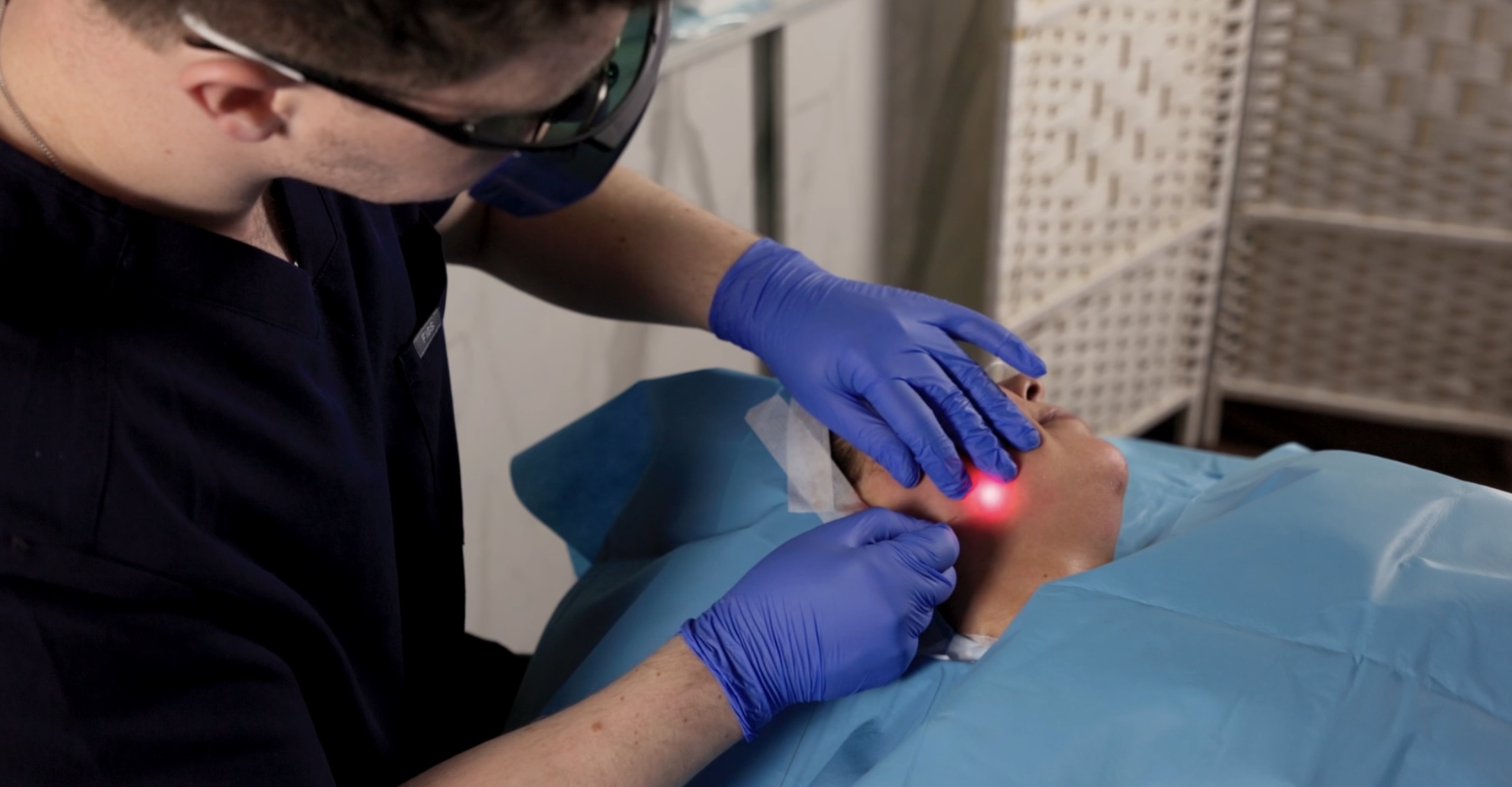
Endolift is a minimally invasive laser treatment that lifts, tightens and contours the face and body without surgery, incisions or downtime. At Aion Labs it is performed by Dr Rob Humphries, who is dual qualified in medicine and dentistry, has taught facial anatomy at the University of Cambridge, and trains other doctors worldwide to perform the procedure.
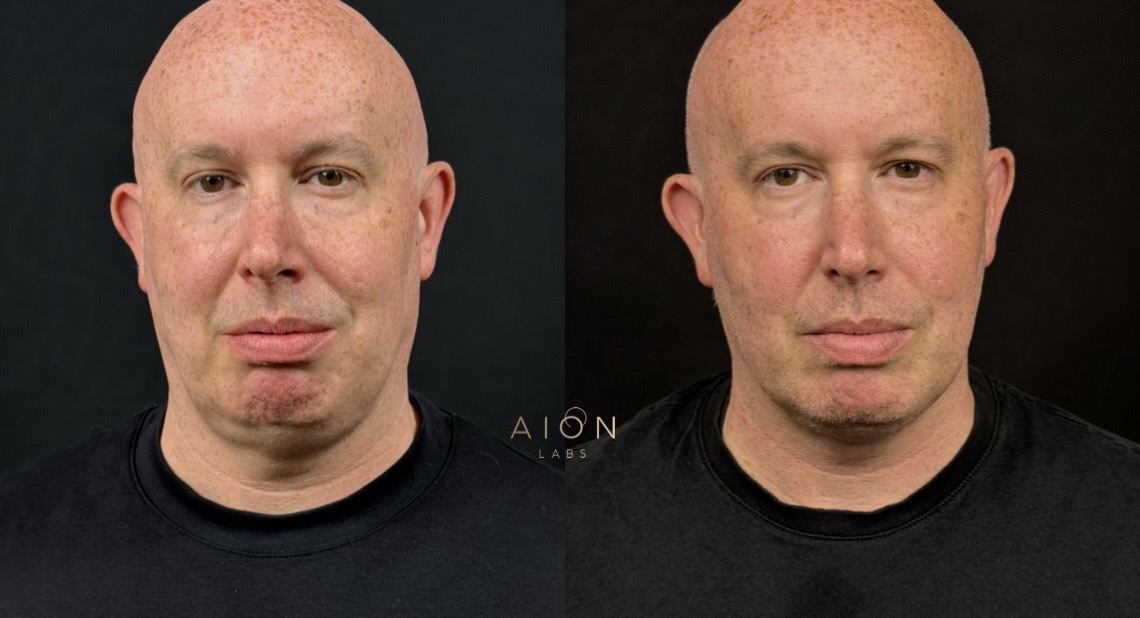
Endolift uses very fine optical fibres, a third of a millimetre thick, placed just beneath the skin to deliver laser energy directly into the deeper layers. This heats the tissue in a controlled way, triggering the production of large amounts of collagen and elastin over the following months, and reducing small pockets of fat where desired. The result is a gradual, natural-looking lift and tightening - without cutting, scars or general anaesthetic. The fibre is removed at the end of the procedure and nothing is left under the skin, unlike thread lifts.
The laser energy is delivered exactly where skin laxity begins: the deep dermis and subcutaneous fat. By stimulating your own collagen and elastin at that level, Endolift firms and lifts from within, rather than sitting on the surface. Because it works with your body's own healing response, results continue to develop and strengthen over three to six months. If needed, Endolift can be used to selectively reduce specific fat pads, such as that found in a double chin.
Face - Skin laxity around the jawline, jowling, nasolabial folds, and mild fat under the chin.
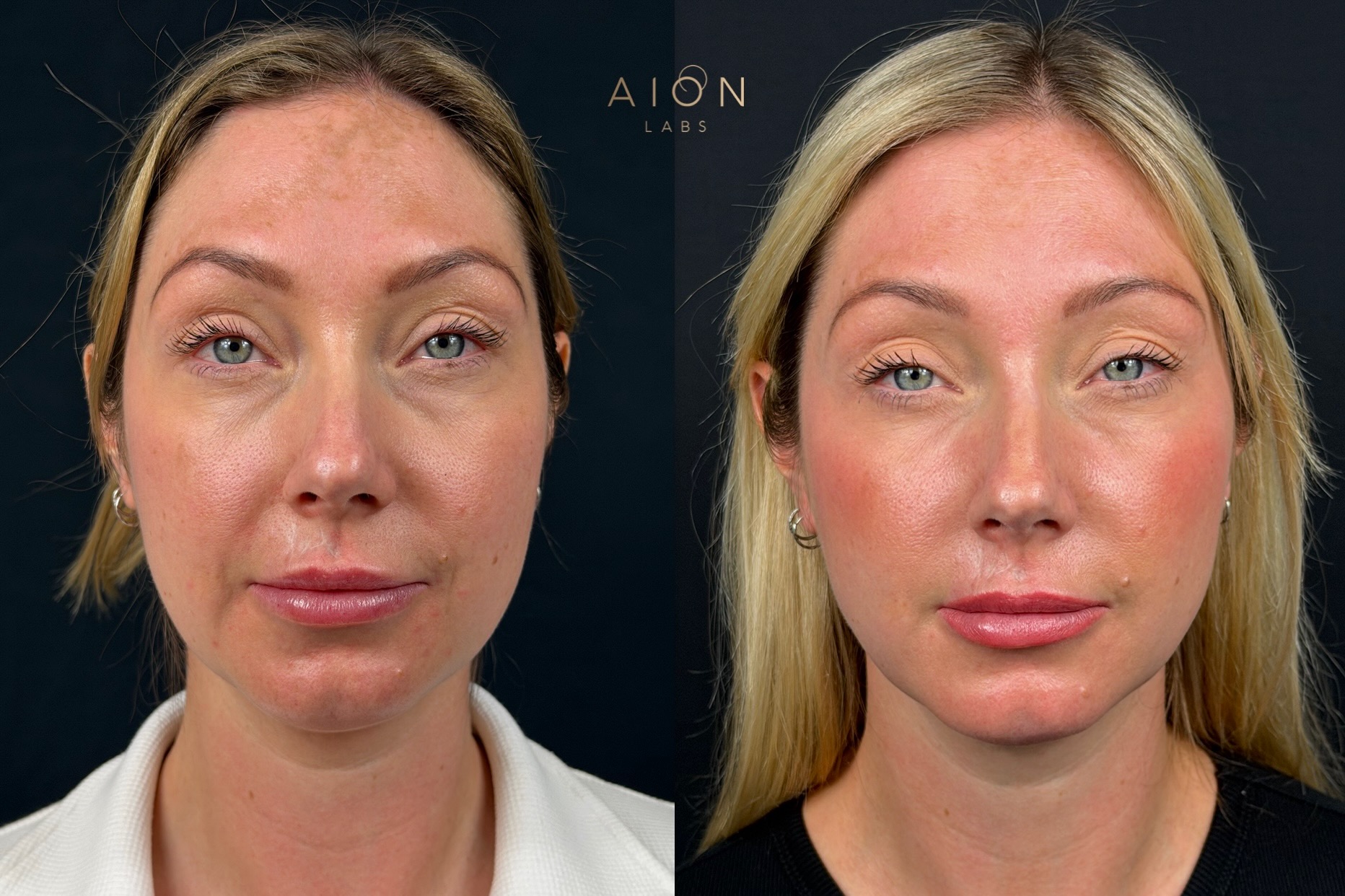
Neck - Skin laxity in the neck, crepey, saggy skin, turkey neck and folds.
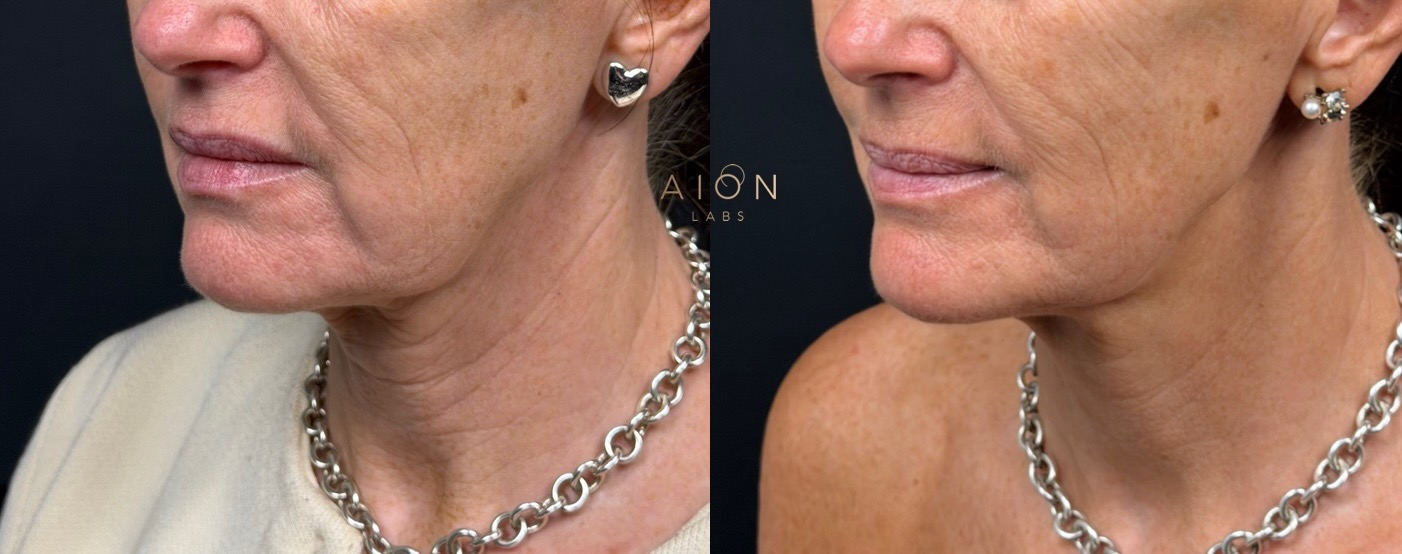
Body - Loose skin on the arms, abdomen and thighs.
It is particularly effective for restoring a defined jawline, lifting jowls, and tightening skin after weight loss.
A defined jawline is one of the first things people notice fading with age. As the deep support structures of the lower face weaken and skin loses elasticity, definition blurs and jowls begin to form. Because Dr Humphries teaches facial anatomy, Endolift can be targeted precisely to the areas where support has been lost - tightening along the jawline and reducing jowls without surgery or filler.
Read more: Endolift for the Jawline: Why Definition Fades, and How to Get It Back →
Significant weight loss - through lifestyle, diet or GLP-1 medications - often leaves behind facial skin laxity that can make you look older, not younger. A combined, staged approach using Endolift alongside biostimulatory injectables, and in some cases very small amounts of filler in the deep fat pads, restores facial support and firmness without overfilling.
Read more: Why Weight Loss Can Make You Look Older, and What Fixes It →
Recovery - Mild swelling for one to three days, and bruising that typically lasts three to five days (occasionally up to 10 days). The treated skin may feel a little numb or tingly for around a month as the superficial nerves settle - this is normal and resolves on its own.
Visible change -A gradual lift and tightening over three to six months, as your skin lays down new collagen and elastin fibres.
Duration - Results last two to three years. The treatment can be repeated after six months if further tightening is desired.
Cost - £1950 – £3300 depending on the area treated.
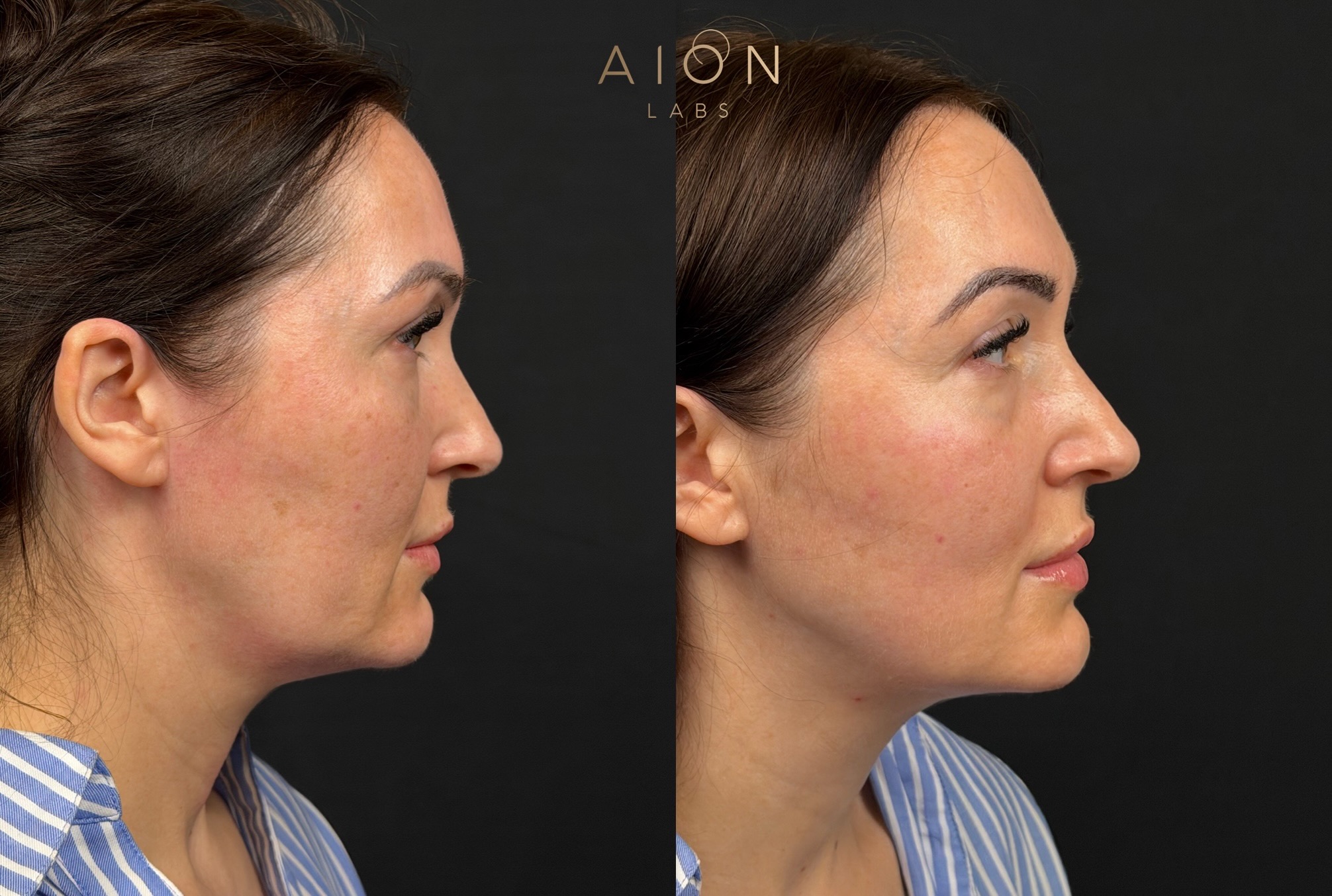
In the right hands, Endolift is a very safe treatment that has been performed many thousands of times across Europe and worldwide, with the great majority of patients having a straightforward experience and a short recovery.
When Endolift goes wrong, the cause is rarely the treatment itself. Serious complications come overwhelmingly from three things: counterfeit devices, procedures performed by people who are not doctors, and practitioners without proper training in facial anatomy. The fibre delivers energy into a plane that contains nerves and blood vessels — so the safety of the procedure depends almost entirely on the knowledge and control of the person performing it.
That is precisely why Dr Humphries' background matters: dual qualification in medicine and dentistry, experience in maxillofacial surgery, and years teaching facial, head and neck anatomy to medical students at the University of Cambridge - a detailed working knowledge of this exact region that most practitioners simply do not have.
Read more: Is Endolift Safe? An Honest Guide to the Risks, and How to Avoid Them →
And one clear piece of advice: don't be seduced by a cheap price. A treatment priced well below the market is a signal, not a bargain.
Dr Rob Humphries is a Cambridge-trained doctor, dual qualified in medicine and dentistry, with over five years of experience in maxillofacial surgery and aesthetic medicine. He has extensive knowledge of facial anatomy - from his work in maxillofacial surgery and from teaching facial, head and neck anatomy to medical students at the University of Cambridge - and is an international trainer for the official Endolift device, teaching other doctors around the world how to perform the treatment safely. He holds an award from Endolift for outstanding achievement in the technique, and performs Endolift exclusively at Aion Labs on Harley Street.
Book your Endolift consultation →
Yes - in the right hands it is a very safe treatment, performed many thousands of times worldwide. Safety depends heavily on the practitioner being a trained doctor, using a genuine device, with real knowledge of facial anatomy.
Most people have some bruising for three to five days, mild swelling for one to three days, and a tingling or numb sensation for around a month. These are normal after-effects rather than complications and settle on their own.
The more skin we can tighten and lift above the jowl and jawline, the better the lifting effect. If we just pass the fibre through jowl and along the jawline, the results are underwhelming.
The procedure is carried out under local anaesthetic, so discomfort during treatment is minimal.
Results typically last two to three years, and the treatment can be repeated after six months if more tightening is desired.
Endolift can produce significant tightening in the lower face, jawline and neck in appropriately selected patients. Unlike a facelift there are no incisions and no skin is removed - instead the skin is tightened and rejuvenated. A consultation with Dr Rob Humphries is essential to confirm whether it's right for you.
Yes. Weight loss often causes facial skin laxity, and a combined approach using Endolift with biostimulatory injectables (and occasionally small amounts of filler) can be transformative. This is assessed at consultation.
£1,950 – £3,000 depending on the area treated.
The safest, most effective Endolift result starts with an honest assessment of whether it's right for you, performed by a doctor who knows the anatomy of the region in detail. Consultations are available with Dr Rob Humphries at Aion Labs, 10 Harley Street, London and virtually.
Book a consultation → · Get in touch →
ProYellow is a yellow-light laser used to treat both redness and pigmentation in the skin. At Aion Labs, Dr Rob Humphries uses it for problems from rosacea and thread veins to sun spots and melasma, often treating both in the same session.
At a glance
The ProYellow laser produces light at a wavelength of 577nm. This is the wavelength most strongly absorbed by oxygenated blood, and it is also absorbed by melanin, the pigment in the skin. The laser heats and seals small blood vessels, and breaks up pigment so the body can clear it.
The laser is delivered as a rapid series of short pulses, often through a scanner that covers the skin evenly. This means treatment is usually comfortable, and bruising is uncommon compared with some older vascular lasers.
Rosacea. Persistent redness and flushing across the cheeks, nose and chin. ProYellow reduces the small vessels that cause the redness, and many patients find their flushing becomes less frequent. It does not cure rosacea, so maintenance sessions are usually needed.
Diffuse facial redness. General redness caused by sun damage or sensitive skin, without a diagnosis of rosacea.
Thread veins (telangiectasia). Fine red or purple vessels on the face, most often around the nose and cheeks. These often clear in one to three sessions.
Spider naevi. A small red spot with fine vessels spreading out from it, common on the face in children and adults.
Cherry angiomas. Small bright red raised spots, usually on the body, which become more common with age.
Red acne marks. Flat red or pink marks left after acne spots heal, also called post-inflammatory erythema.
Red scars and new stretch marks. Scars and stretch marks that are still red or pink can fade faster with treatment.
Poikiloderma of Civatte. Red-brown mottling with fine veins on the sides of the neck and chest, caused by sun damage. As it involves both redness and pigment, ProYellow is well suited to it.
Sun spots and age spots (solar lentigines). Flat brown spots on the face, hands and chest caused by sun exposure. These often clear in one or two sessions.
Freckles. Small light brown spots that darken in the sun. They can be lightened, although new ones can appear with further sun exposure.
General sun damage. Uneven skin tone with a mixture of brown patches and redness. This should be combined with a resurfacing laser for optimal results.
Melasma. Patchy brown pigmentation, often on the cheeks, forehead and upper lip, linked to hormones and sun exposure. Melasma can be stubborn and may come back, so ProYellow is used at gentle settings as part of a wider plan with skincare and strict sun protection.
Post-inflammatory hyperpigmentation. Brown marks left after acne, injury or inflammation.
Consultation. Dr Humphries takes a full medical history, examines your skin and identifies which conditions are present. He will take photos and agree a plan and cost with you.
Treatment. You will wear protective eye shields. Most patients feel a warm or snapping sensation, and cooling is used during treatment. A full face usually takes 30 minutes.
Aftercare. Avoid hot showers, saunas, strenuous exercise and alcohol for 24h, as heat can increase redness. Pigment spots will darken and flake off over 7 days, and should be left to fall away on their own. Use a high-factor sunscreen daily.
Redness and mild swelling are common and usually settle within a few hours to a day. Treated pigment spots darken before they flake away. Less often, patients can have bruising, blistering or temporary changes in skin colour, either lighter or darker. Scarring is rare.
Thread veins and sun spots often clear in one to three sessions. Rosacea and diffuse redness usually need three to four sessions, 4 weeks apart, with maintenance once or twice a year. Melasma often takes 6 sessions.
Most patients describe a warm or snapping feeling. Cooling is used during treatment, and numbing cream is rarely needed.
Most patients return to normal activities straight away. Redness usually settles within a day, and pigment spots flake away over 7 to 10 days.
No treatment cures rosacea, but ProYellow can reduce redness and visible vessels significantly. Maintenance sessions help keep the results.
Yes. The 577nm wavelength targets both blood vessels and pigment, so both can often be treated in the same session, using different settings.
It can help patients with melasma when used at gentle settings, alongside skincare and strict sun protection. It works by reducing the inflammation that triggers melanocyte over activity, as well as by directly breaking down the pigment. Melasma can return, and Dr Humphries will discuss whether it is the right option for you.
Dr Rob Humphries MB BChir (Cantab), BDS, MRCS is the founder of Aion Labs. He studied medicine at Cambridge and dentistry at King’s College London, trained in oral and maxillofacial surgery, and is an award-winning international Endolift trainer. [Link to /team/ page]
Subcision is a treatment for acne scars that are tethered to the tissue underneath, which pulls the skin down and creates a rolling or uneven surface. At Aion Labs, Dr Rob Humphries combines every subcision with Radiesse (an injectable biostimulator), placed during the same procedure, to restore lost volume and help keep the scars released.
At a glance
Subcision works best on scars that soften when the skin is stretched. Ice pick scars and very shallow scars usually respond better to other treatments, such as laser resurfacing or TCA Cross chemical peels.
Many acne scars are held down by bands of scar tissue that connect the skin to the deeper layers. Subcision uses a fine needle or blunt cannula, passed under the skin, to release these bands so the skin can lift back up.
At Aion Labs, Radiesse is placed into the released area straight away, during the same procedure. It restores volume under scars where tissue has been lost, and acts as a spacer to reduce the chance of the bands reattaching as the skin heals. Radiesse is a gel made of calcium hydroxylapatite microspheres, and it also stimulates your own collagen over the following months.
Most patients have more than one type of scar. For rolling or boxcar acne scarring, Dr Humphries almost always recommends at least one session of subcision alongside a course of three ablative laser treatments. Subcision releases and lifts the scars from below, and the laser resurfaces the skin surface.
Consultation. Dr Humphries takes a full medical history and examines your scars in different lighting to work out which types you have. He will take photos and agree a plan and cost with you.
Treatment. Local anaesthetic is used to numb the area. The scar bands are released and Radiesse is placed into the treated area straight away. Each session usually takes 30 minutes.
Aftercare. Expect bruising and swelling, which can be noticeable for 1 week. Avoid strenuous exercise, alcohol and make-up for 24-48 hours.
Bruising and swelling are expected and are often more noticeable than after other injectable treatments. Small lumps can be felt under the skin for a few weeks while the area heals.
Radiesse cannot be dissolved in the way hyaluronic acid filler can, although the product is gradually broken down by the body. Rarely, it can cause firm nodules or, as with any injectable, block a blood vessel. Dr Humphries will talk through these risks with you before treatment.
Most patients have a course of 3 sessions, 6 weeks apart. Where subcision is combined with laser, at least one session is usually recommended alongside a course of three laser treatments.
The area is numbed with local anaesthetic, so most patients feel pressure rather than pain. It can feel sore for a few days afterwards.
Bruising and swelling usually last 1 week. Most patients plan treatment so they do not have important events in the following fortnight.
Radiesse is placed into the released area during the procedure. It adds volume under scars where tissue has been lost, reduces the chance of the scar bands reattaching, and stimulates collagen over the following months.
Subcision can significantly improve rolling scars, but most patients see an improvement rather than complete removal. Dr Humphries will give you a realistic idea of what to expect at your consultation.
Yes, and for rolling or boxcar scars this is what Dr Humphries usually recommends. A typical plan includes at least one session of subcision alongside three ablative laser treatments.
Dr Rob Humphries MB BChir (Cantab), BDS, MRCS is the founder of Aion Labs. He studied medicine at Cambridge and dentistry at King’s College London, trained in oral and maxillofacial surgery, and is an award-winning international Endolift trainer. [Link to /team/ page]
Dermal filler can restore volume lost with age and add definition to areas such as the cheeks or jawline. At Aion Labs every treatment is carried out by Dr Rob Humphries, a doctor with a background in facial anatomy and oral and maxillofacial surgery.
At a glance
£400 per ml of filler.
Typical number of mls required per area of concern:
Cheeks - 2ml
Jawline - 4ml
Chin - 2ml
Tear Trough 1ml (Tear trough filler cost is £500)
Lips - 1ml
Temples - 1ml
Nasolabial folds - 2ml (split across the cheeks and the nasolabial fold itself)
Marionettes - 1ml
Nose - 1ml (nose filler cost is £500)
The amount you need may differ. Dr Humphries will confirm your plan and cost at your consultation before any treatment.
Most dermal fillers are made from hyaluronic acid, a molecule found naturally in the skin that holds water. The filler is a gel placed at a specific depth under the skin, using a fine needle or a blunt cannula. It replaces lost volume or supports the tissues above it, and the body gradually breaks it down over time.
With age the face loses bone, fat and ligament support, and the skin above starts to sag or fold. Restoring support in the right place can improve the areas below more naturally than filling each line directly. This is why nasolabial fold treatment here includes filler in the cheeks as well as the fold itself.
Dr Humphries spent a year teaching facial anatomy at the University of Cambridge and trained in oral and maxillofacial surgery. The face has a dense network of blood vessels, and the most serious risks of filler come from product entering or pressing on one of them. Knowing where these vessels run, and at what depth, guides where and how he injects. This matters most in higher-risk areas such as the nose and tear troughs.
He prefers to use less product, placed precisely. Where skin laxity or poor skin quality is the main issue, he may recommend Endolift or a collagen-stimulating treatment instead. He has a less-is-more approach with filler and believes it should only be used in small amounts where volume replacement is the only appropriate treatment.
Consultation. Dr Humphries takes a full medical history and assesses your face at rest and in movement. He will take photos, talk through what you would like to change and agree a plan and cost with you.
Treatment. Most fillers contain local anaesthetic, and numbing cream can be applied first. Treatment usually takes 30 to 60 minutes.
Aftercare. Avoid strenuous exercise, alcohol and make-up for 48 hours. Some swelling is normal for the first few days.
Swelling, bruising, tenderness and redness at injection points are common and usually settle within a week. Less often, small lumps or unevenness can occur, and infection is rare.
The most serious risk is filler blocking a blood vessel (vascular occlusion). This can damage the skin and, very rarely, affect eyesight. Dr Humphries uses techniques to reduce this risk, and the clinic keeps emergency treatment on site. You will be given contact details to use if you notice any concerning symptoms after treatment.
Most fillers contain local anaesthetic and numbing cream can be used beforehand. Most patients find it very manageable.
Usually 6 to 18 months. Lips tend to break down faster than the cheeks or chin.
Dr Humphries plans treatment around your anatomy and uses only as much product as you need. More can be added at your review if needed.
Hyaluronic acid filler can be dissolved with an enzyme if needed.
Filler adds volume directly. Radiesse and Sculptra mainly work by stimulating your own collagen over a few months. Some patients benefit from both.
Wait at least 48h, or longer if you have significant swelling.
Dr Rob Humphries MB BChir (Cantab), BDS, MRCS is the founder of Aion Labs. He studied medicine at Cambridge and dentistry at King’s College London, trained in oral and maxillofacial surgery, and is an award-winning international Endolift trainer.
Lines on the forehead, between the brows and around the eyes are some of the most common reasons patients come to see us. Treatment starts with a consultation with Dr Rob Humphries to work out what is driving yours and what treatment is most appropriate.
At a glance
Lines fall into two broad groups. Dynamic lines appear when you move your face, such as frowning, raising your eyebrows or smiling, and do not require treatment. Static lines are visible even when your face is at rest, come from repeated contraction of the muscles underneath the skin. These become etched into the skin over time as collagen and elasticity decline.
Dr Humphries will look at your skin quality, how your facial muscles move, your brow position and the underlying structure of your face. He will talk through what you would like to change and what is realistic, then recommend a plan.
Depending on what we find, options may include:
Prescription-only medicines are only offered after a face-to-face consultation with a doctor, and only where they are appropriate for you. Pricing available on request.
Botulinum toxin is a prescription-only medicine that temporarily reduces the activity of the muscles it is injected into. It is given through very fine injections and the appointment usually takes 15 minutes.
The effect usually begins within a few days and reaches its full effect after around two weeks. It typically lasts three months, after which muscle activity gradually returns.
Possible side effects include redness, swelling or bruising at injection sites, headache, and temporary drooping of the eyelid or brow. Rarely, effects can spread beyond the treated area. Dr Humphries will discuss these with you in full before any treatment.
It is not suitable if you are pregnant or breastfeeding, have a neuromuscular condition such as myasthenia gravis, have an infection at the treatment site, or take certain medications. You will complete a full medical history before treatment.
That depends on whether your lines are caused by movement, skin ageing or both. This is what the consultation is for.
The aim of any treatment we recommend is to soften lines while keeping normal expression. Your plan is based on how your face moves.
Yes. Deeper lines visible at rest usually respond better to treatments that rebuild the skin, such as laser resurfacing, than to muscle treatment alone.
It varies. Some options have none. Laser resurfacing can involve several days of redness and peeling. Dr Humphries will explain what to expect for your plan.
Yes. All treatment for lines and wrinkles starts with a consultation with a doctor.
Dr Rob Humphries MB BChir (Cantab), BDS, MRCS is the founder of Aion Labs. He studied medicine at Cambridge and dentistry at King’s College London, trained in oral and maxillofacial surgery, and is an award-winning international trainer for several laser devices.
PRP (platelet-rich plasma) is a treatment made from a small sample of your own blood. At Aion Labs, Dr Rob Humphries uses PRP for thin skin under the eyes, for hair loss, and to support healing after laser resurfacing.
At a glance
A small amount of blood is taken from your arm, as in a routine blood test. It is spun in a centrifuge to separate the platelets and plasma from the red blood cells. Platelets contain growth factors that play a part in the body’s natural healing, and the concentrated plasma is then injected or applied to the area being treated.
Because PRP comes from your own blood, there is no risk of an allergic reaction to the product itself. Results vary between patients, and Dr Humphries will give you a realistic idea of what to expect at your consultation.
The skin under the eyes is some of the thinnest on the face. PRP is injected in small amounts to support skin quality in this area, and can help where thin skin makes dark circles or fine lines more visible. It adds no volume, so it is often used for patients who are not suitable for tear trough filler or prefer a more natural way to regenerate the skin.
PRP is injected into the scalp in the areas of thinning. It is most often used for pattern hair loss in men and women, where it may help slow shedding and improve hair thickness. It works best when started early, while hair follicles are still active.
Hair loss has many causes, so Dr Humphries will take a full history and may recommend blood tests to look for treatable causes such as low iron or thyroid problems before starting treatment.
PRP can be applied to the skin straight after ablative laser treatment with fractional CO2 or Erbium YAG, while the skin is open and able to absorb it. It is used to support the skin’s healing in the days after treatment, and many patients choose to add it to each laser session.
Consultation. Dr Humphries takes a full medical history, assesses the area you would like treated and agrees a plan and cost with you. For hair loss, he will take photos of your scalp to track progress.
Treatment. Blood is taken from your arm and processed while numbing cream is applied. The PRP is then injected with a fine needle, or applied to the skin after laser treatment.
Aftercare. Avoid make-up for 12 hours, and strenuous exercise, alcohol and saunas for 24 hours. For scalp treatment, avoid washing your hair until the next day. Avoid anti-inflammatory painkillers such as ibuprofen for a few days before and after treatment, as they can reduce the effect of the platelets.
Mild swelling, redness and bruising are common and usually settle within a few days. Bruising under the eyes can be more noticeable. The scalp can feel tender after hair treatment, and some patients have a mild headache. You may also have a small bruise where blood was taken. Infection is rare.
Most patients start with a course of [3] sessions, [4] weeks apart, followed by a maintenance session every [6 to 12] months. After laser resurfacing, PRP is usually added to each laser session.
Numbing cream is applied first. Most patients feel a brief sting with each injection. The scalp can be more sensitive than the face.
Changes build gradually. Skin improvements are usually seen over [2 to 3] months. For hair loss, it can take [3 to 6] months to see a difference in thickness.
PRP may help slow hair loss and improve thickness, but it does not work for everyone or for every type of hair loss. Dr Humphries will assess the cause of your hair loss before recommending treatment.
PRP is made from your own blood, so there is no risk of an allergic reaction to the product. As with any injection, there is a small risk of bruising and infection.
PRP is made from your own blood. Polynucleotides are a purified product derived from fish DNA. Both are used to support skin quality, and some patients benefit from combining them.
Dr Rob Humphries MB BChir (Cantab), BDS, MRCS is the founder of Aion Labs. He studied medicine at Cambridge and dentistry at King’s College London, trained in oral and maxillofacial surgery, and is an award-winning international Endolift trainer.
Microneedling is a skin treatment that uses very fine needles to create controlled micro-injuries in the skin, which prompt it to repair itself. At Aion Labs, Dr Rob Humphries combines microneedling with an exosome serum applied straight after treatment, while the skin can absorb it.
At a glance
A medical microneedling device makes thousands of tiny channels in the skin, to a depth set for each area of the face. As the skin heals, it produces new collagen and elastin, which can gradually improve texture and firmness.
Exosomes are tiny particles released by cells, which carry signals between them. The exosome serum is applied to the skin straight after microneedling, while the channels are open. Exosomes are thought to support the skin’s healing and may help reduce redness after treatment. Research into exosomes in skin care is still at an early stage, so Dr Humphries will give you a realistic idea of what to expect at your consultation.
Consultation. Dr Humphries takes a full medical history, assesses your skin and talks through what you would like to improve. He will take photos and agree a plan and cost with you.
Treatment. Your skin is cleansed and numbing cream is applied for around 30 mionutes.
Aftercare. Avoid make-up for 24 hours, and strenuous exercise, saunas and swimming for 3 days. Detailed after care will be given post procedure.
Redness and mild swelling are expected and usually settle within one to three days. The skin can feel tight, dry or flaky for a few days. Small spots of bleeding during treatment are normal. Less often, patients can have a breakout of spots, temporary pigmentation changes or infection.
Most patients start with a course of [3] sessions, [4] weeks apart. Maintenance sessions every [3 to 6] months help keep the results.
Numbing cream is applied first, so most patients feel a scratching or vibrating sensation rather than pain. Areas over bone, such as the forehead, can feel more sensitive.
Most patients have redness for one to three days, similar to mild sunburn. You can usually return to work the next day.
Exosomes are tiny particles released by cells, which carry signals between them. In skin treatments they are applied as a serum after microneedling to support the skin’s healing.
PRP is made from your own blood. Exosomes come from a prepared product, so no blood test is needed. Both are used to support healing after microneedling, and Dr Humphries will advise which suits you.
They suit different needs. Microneedling has less downtime and works well for overall skin quality. Laser resurfacing gives a stronger result for deeper lines and scarring but needs more recovery time.
Dr Rob Humphries MB BChir (Cantab), BDS, MRCS is the founder of Aion Labs. He studied medicine at Cambridge and dentistry at King’s College London, trained in oral and maxillofacial surgery, and is an award-winning international Endolift trainer.
Ablative laser resurfacing removes microscopic layers of skin in a controlled way. As the skin heals, it produces new collagen and remodels itself, which can improve wrinkles, scarring, texture and pigmentation. At Aion Labs, Dr Rob Humphries uses both CO2 and Erbium lasers, in fractional and fully ablative modes, and plans each treatment around your skin and what you want to improve.
At a glance
Ablative lasers vaporise tiny amounts of skin with great precision. This triggers the body’s natural healing, mainly through new collagen production and remodelling of the skin over the following months.
CO2 laser is ideal for deep wrinkles, significant scarring and textural irregularities. It heats the deeper skin as well as removing the surface, which gives a strong tightening effect.
Erbium laser targets fine lines and pigmentation with more precision and typically a shorter recovery. It produces less heat in the surrounding skin, which makes it suitable for a wider range of skin types.
Fractional ablative laser vaporises tiny columns of skin, leaving healthy untreated skin in between. The untreated skin helps the treated areas heal, which means a faster recovery and lower risk of side effects than full ablation. This is mainly used for patients wanting rejuvenation and reduction in sun damage. The downtime is typically 3-7 days.
Fully ablative laser vaporises the whole surface of the skin. Consequently it has worse and longer downtime (7-10 days). It can be used selectively around:
Acne scarring (rolling, boxcar scars) - find out more about acne treatment here
Laser blepharoplasty (for tightening the skin of the upper eyelids - see image below)
Deep etched in lines around the mouth (eg smokers lines)
Sun spots, raised moles, skin tags
Full ablation is recommended for a significant improvement in acne scarring. Many patients have fractional treatment across the whole face, with full ablation focused on the scarred areas in the same session.
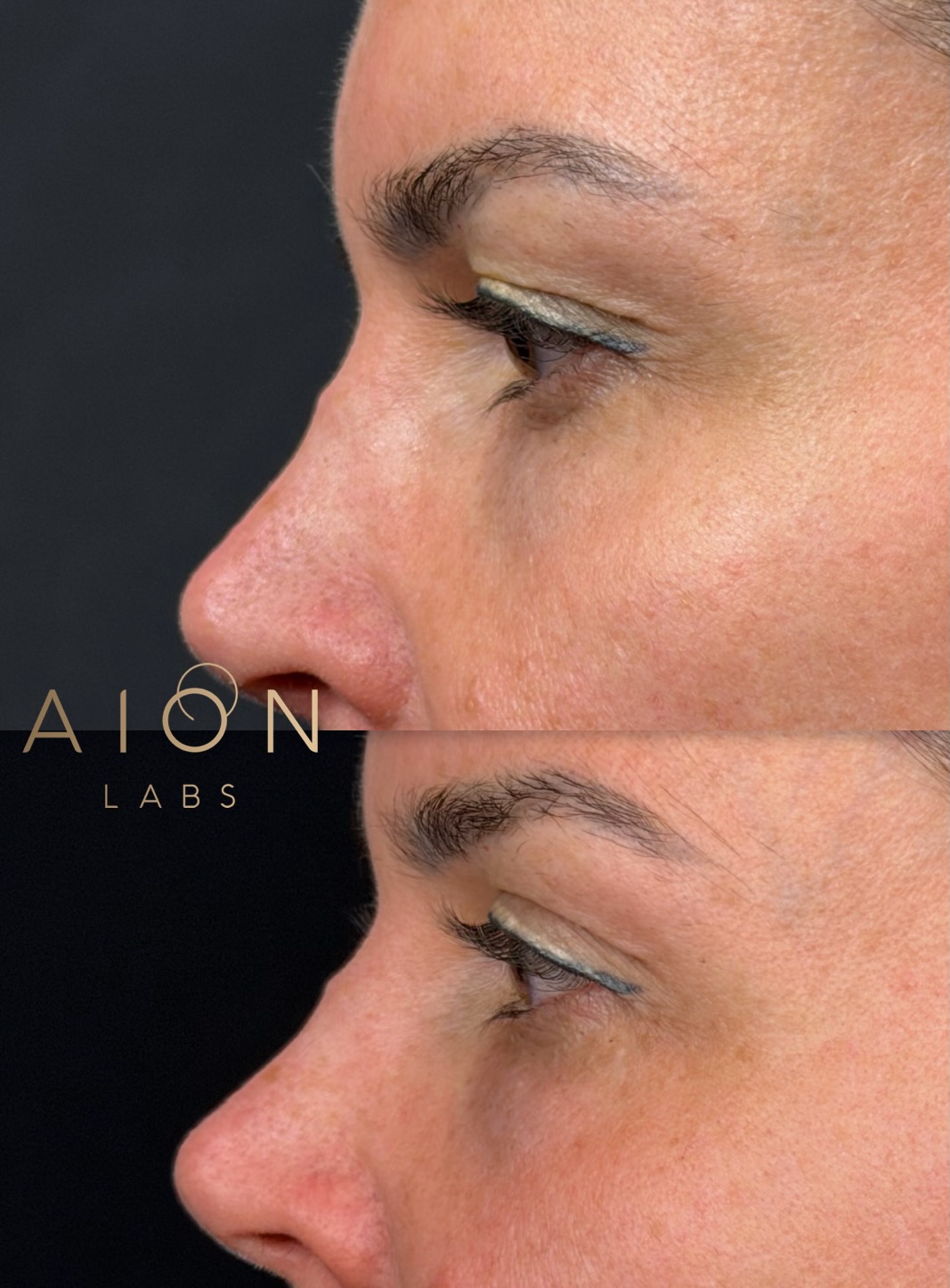
Fractional Erbium YAG laser can be used in all skin types. Darker skin types have a higher risk of pigmentation changes after laser, so the skin is prepared for 2 to 4 weeks beforehand with prescribed skincare to reduce this risk. Dr Humphries will assess your skin type at your consultation and plan the safest approach. Even with these precautions, pigmentation may still occur. However, it is important to treat scarring and texture first, and then address colour later.
Consultation. Dr Humphries takes a full medical history, examines your skin and talks through what you would like to improve. He will take photos, confirm your skin type and agree a plan and cost with you. If your skin needs preparing, this will start 2 to 4 weeks before your first session.
Treatment. Numbing cream is applied for around 45 minutes. The laser itself usually takes 30 minutes for a full face.
Aftercare. Your skin will feel hot and look red, similar to sunburn. Keep it moisturised with the products provided, and avoid make-up for 5 to 7 days or until peeling has finished. Avoid sun exposure and use a high-factor sunscreen daily for at least 3 months. You may be given antiviral medication if you have a history of cold sores.
Days 1 to 2. Redness, swelling and a warm feeling in the skin.
Days 3 to 7. The skin darkens slightly and starts to peel or flake. Most patients are back to normal activities by the end of the first week after fractional treatment.
After full ablation. Recovery is longer, usually 7 to 10 days before the skin has healed over, with pinkness that can last several months.
Weeks 4 to 12. New collagen continues to form and results keep improving.
Redness, swelling and peeling are expected. Less often, patients can have a flare of acne or milia (small white spots), cold sores, or infection while the skin heals. Pigmentation changes, either darker or lighter patches, can occur and are more likely in darker skin types. Scarring is rare. Dr Humphries will talk through these risks with you before treatment.
A course of 3 is typically recommended. Some patients see the result they want after 1 or 2 sessions, depending on the intensity of treatment.
CO2 laser is ideal for deep wrinkles, significant scarring and texture. Erbium laser treats fine lines and pigmentation with more precision and usually a shorter recovery. Dr Humphries may use both in the same plan.
Fractional laser treats tiny columns of skin and leaves healthy skin in between, for a faster recovery. Fully ablative laser removes thin layers from the whole treated area, giving a stronger result with longer recovery. It is recommended for significant acne scarring.
Fractional Erbium laser can be used in all skin types. Darker skin types need 2 to 4 weeks of skin preparation beforehand to reduce the risk of pigmentation changes.
Expect redness and peeling for 3 to 7 days after fractional treatment, depending on your skin type and the intensity of treatment. Full ablation needs a longer recovery.
Numbing cream is applied first and cooling is used during treatment. Most patients feel heat and a prickling sensation. The skin can feel like sunburn for a day or two afterwards.
Dr Rob Humphries MB BChir (Cantab), BDS, MRCS is the founder of Aion Labs. He studied medicine at Cambridge and dentistry at King’s College London, trained in oral and maxillofacial surgery, and is an award-winning international Endolift trainer.

Aion Labs treatments
Aion Labs believes true health optimisation involves more than external aesthetics. Aging should be optimised, not feared.
Our services address internal wellness, chronic disease prevention, and lifestyle adjustments to foster vitality and beauty from the inside out. Whether you're tackling the effects of aging, enhancing performance, or improving your appearance, Aion Labs is here with tailored solutions that empower you in your career and lifestyle.