The redness that creams never quite fix
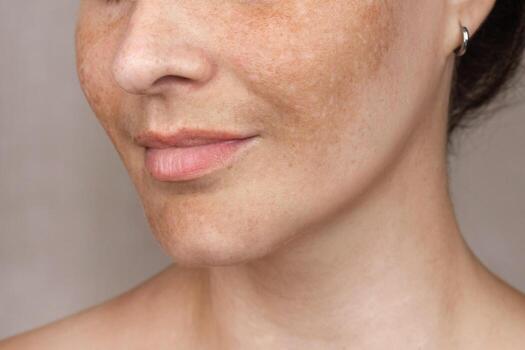
Rosacea is one of the most common reasons people come to see me about their skin, and one of the most misunderstood. It usually starts as a tendency to flush easily, across the cheeks, nose, chin and forehead. Over time the flushing can settle into a more permanent redness, and fine broken capillaries, the little red thread-like vessels, start to become visible. Some people also get bumps and spots that look like acne but are not.
Patients have often spent years managing it with creams, gentle skincare and trigger avoidance, and while those things help, they tend to hit a ceiling. The background redness and the visible vessels stay. There is a clear reason for that, and understanding it explains why a particular kind of laser works when topical treatment alone cannot.
Why rosacea is a vascular condition
The key thing to understand about rosacea is that it is, at its core, a condition of blood vessels.
In rosacea-prone skin, the small blood vessels in the face become overreactive and dilated. They open too readily in response to triggers such as heat, alcohol, spicy food, stress and temperature change, which is the flushing everyone recognises. Over time these vessels become more numerous and more permanently dilated, which is what produces the fixed redness and the visible thread veins. There is also an inflammatory element running alongside this, and the two feed each other: the vessels drive inflammation, and inflammation drives more vascular activity.
This is why creams have a ceiling. They can reduce inflammation on the surface and calm the skin, but they cannot close down or remove the abnormal blood vessels that are the engine of the redness. To treat rosacea at its source, you have to treat those vessels. That is exactly what the right laser does.
How the 577nm ProYellow laser treats rosacea
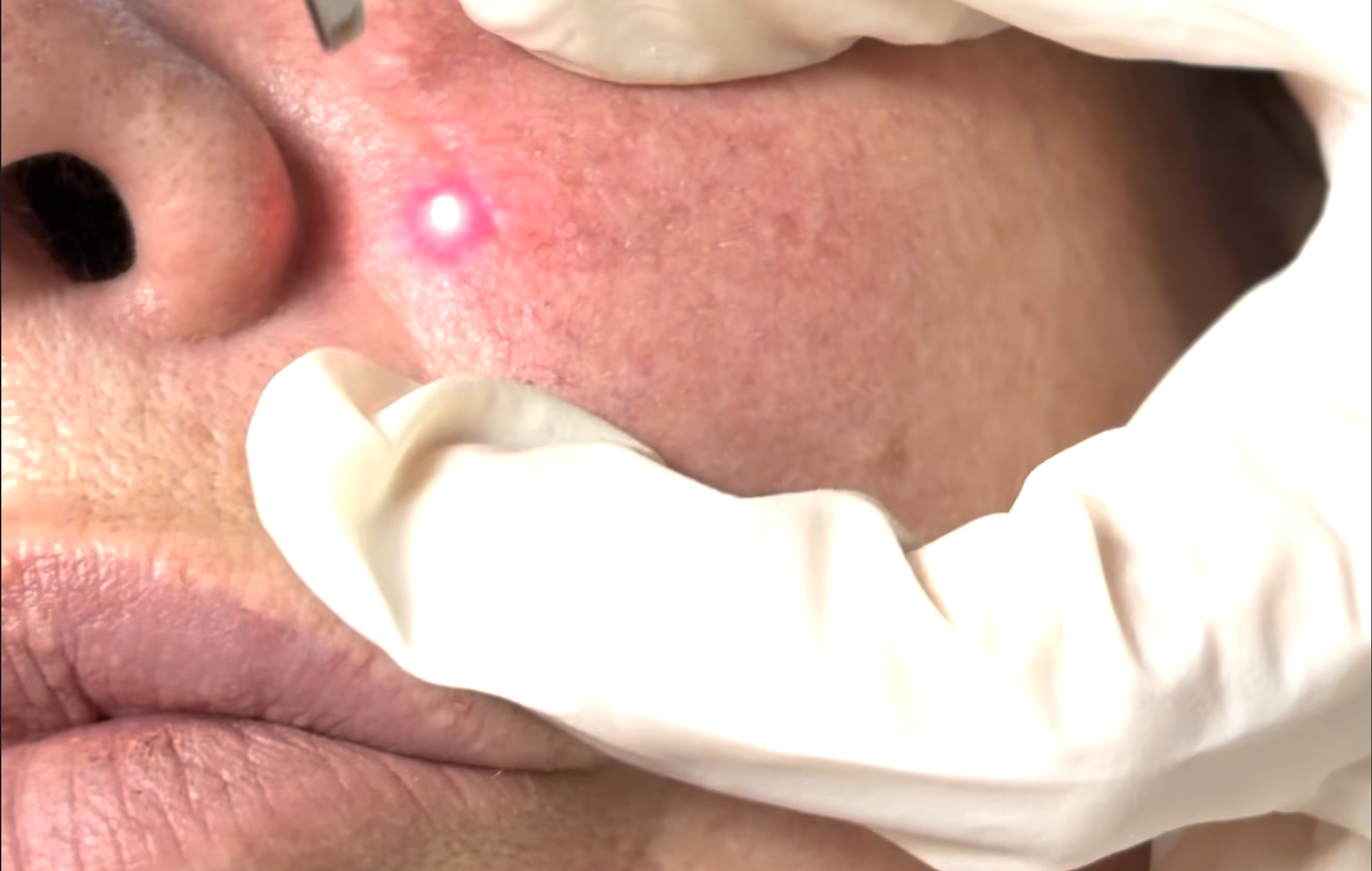
The ProYellow laser produces light at a wavelength of 577nm. That number matters, because 577nm is very strongly absorbed by haemoglobin, the red pigment inside blood. In practical terms, the laser energy is taken up by the blood inside the abnormal vessels and largely ignored by the surrounding skin.
When those vessels absorb the energy, they are heated and closed down from within, and the body then clears them away naturally over the following weeks. Because 577nm is so well targeted to blood, it can do this precisely, treating the vessels while sparing the skin around them, which makes it both effective and gentle when used correctly.
For rosacea specifically, this does three useful things. It reduces the background redness by closing down the diffuse network of dilated vessels. It clears the visible thread veins and broken capillaries directly. And by reducing the vascular load in the skin, it calms the inflammatory cycle that keeps rosacea active, so the skin is less reactive afterwards. Treating the blood supply is treating the cause, which is why the results hold in a way that surface treatments do not.
Most people need a short course of sessions rather than one, because rosacea is diffuse and the vessels are cleared progressively. I will always be honest that rosacea is a manageable condition rather than a curable one: the underlying tendency remains, and occasional maintenance, along with sensible trigger and sun management, keeps it under good control long term.
"Creams calm the surface. To actually reduce the redness, you have to treat the blood vessels producing it, and that is what a 577nm laser is built to do."
- Dr Rob Humphries, Clinical Director
What else the 577nm laser treats
Because 577nm targets blood vessels and haemoglobin so precisely, its usefulness goes beyond rosacea. The same principle applies to several other concerns.
Active acne
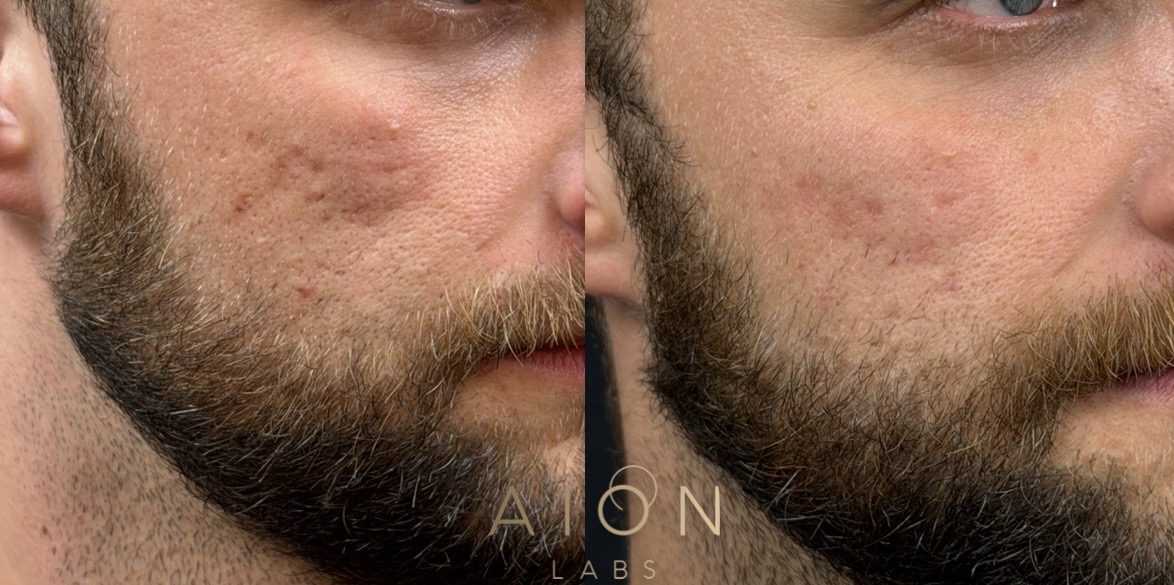
The ProYellow can help active acne through a slightly different mechanism. Inflamed acne is fed by an increased local blood supply, and the laser reduces that vascular supply to the inflamed areas, helping to calm active breakouts and the redness that surrounds them. By reducing inflammation and the blood flow feeding it, it can settle angry, inflamed skin, and it also helps fade the lingering red marks that acne leaves behind. It works well as part of a broader acne plan rather than as a standalone cure.
Thread veins
Facial thread veins, those fine red or purple vessels that commonly appear around the nose and cheeks, are an ideal target. Because they are discrete vessels filled with blood, the 577nm energy is absorbed directly by them, closing them off so the body can clear them. These often respond very satisfyingly, sometimes in only one or two sessions.
Small haemangiomas and vascular lesions
Small vascular lesions such as cherry angiomas and other minor haemangiomas, which are essentially small collections of blood vessels, can also be treated. The same targeted absorption allows the lesion to be closed down and cleared with precision, while leaving the surrounding skin largely untouched.
In each of these, the underlying logic is the same as for rosacea: the problem is vascular, and a wavelength tuned to blood treats it at source.
Frequently asked questions
Is the 577nm laser safe for my skin?
The 577nm wavelength is well tolerated, and treatment is generally comfortable with minimal downtime. As with any laser, the treatment should be assessed against your individual skin, and richer skin tones need a considered approach, so the settings and suitability are always judged at consultation. Temporary redness or mild swelling in the treated area for a short time afterwards is normal and settles quickly.
Can rosacea be cured?
Rosacea is managed rather than cured. The 577nm ProYellow laser can substantially reduce the redness and clear visible vessels by treating the blood supply that drives the condition, but the underlying tendency remains, so occasional maintenance and trigger management keep it controlled.
How does the ProYellow laser treat redness?
The 577nm wavelength is strongly absorbed by the blood inside the dilated vessels that cause facial redness. The vessels are heated, closed off and cleared by the body, reducing both the background redness and visible thread veins at their source.
Does laser treatment help active acne?
Yes. The 577nm laser reduces the blood supply feeding inflamed acne, helping to calm active breakouts and fade the red marks left behind. It works best as part of a wider acne treatment plan rather than on its own.
How many sessions will I need?
Rosacea and diffuse redness usually need a short course of sessions, as the vessels are cleared progressively. Discrete thread veins and small vascular lesions can respond in one or two. The exact number is assessed at consultation.
Is the treatment painful?
Most people find it well tolerated, with a brief warm or stinging sensation as each pulse is delivered. Downtime is minimal, with some temporary redness or mild swelling that settles quickly.
Book a consultation
If facial redness, rosacea or visible vessels have not responded to creams, treating the blood vessels directly is often what finally helps. Consultations are available at Aion Labs in London.