What is "Ozempic face"?
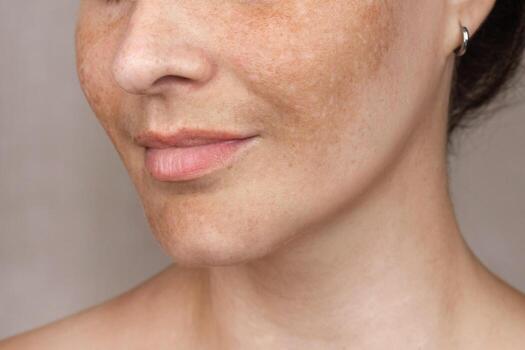
"Ozempic face" is not a medical diagnosis. It is a media term for the facial changes some people notice after rapid weight loss, most commonly:
-Looking older in the face despite feeling healthier
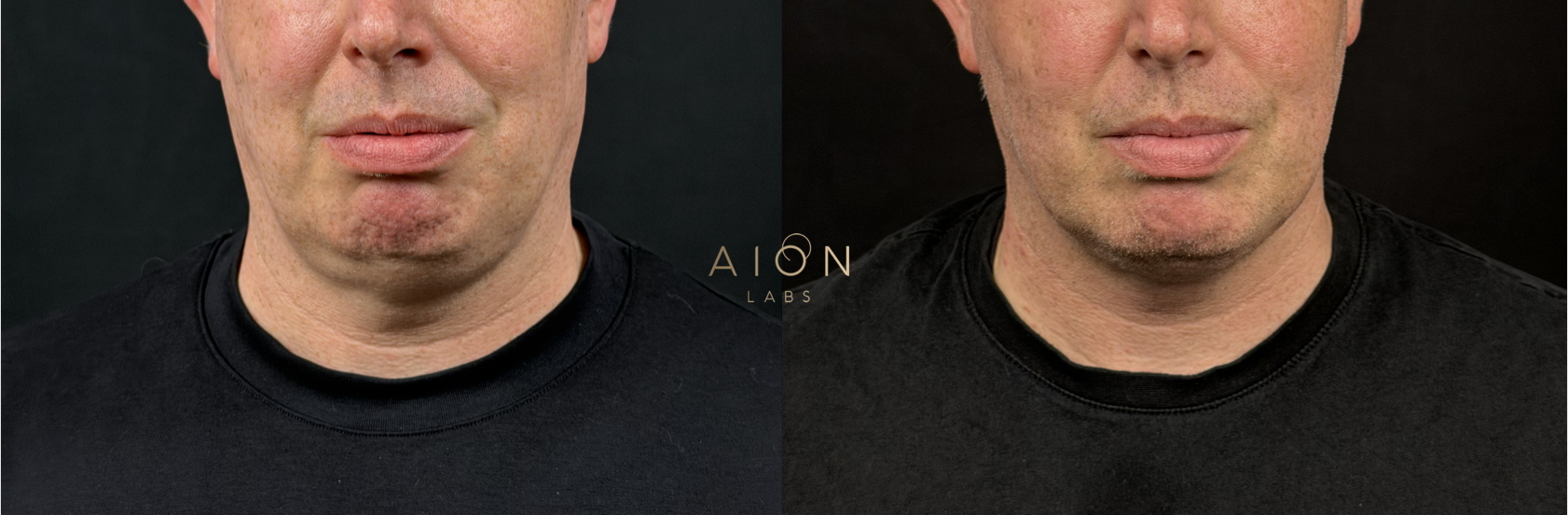
-Loose skin along the jawline and early jowls
-Deeper nasolabial folds and marionette lines
-Flattening or hollowing of the cheeks
-More prominent under-eye hollows and a tired appearance
-A general loss of facial definition
The name is misleading in one important way. These changes are not caused by semaglutide, tirzepatide, or any other drug acting on facial tissue. The same pattern appears after bariatric surgery, after sustained dieting, and after any substantial weight loss achieved by any method. GLP-1 medications simply make significant weight loss achievable for far more people, and make it happen faster.
What patients are seeing is not damage. It is the underlying architecture of facial ageing becoming visible.
Why does losing weight make your face look older?
Two separate things happen, and they need to be understood separately because they are treated differently.
1. The skin has already been stretched
Fat is stored in the face as well as the abdomen and hips. As facial fat compartments enlarge over months or years, the overlying skin stretches to accommodate them. Because the process is gradual, almost nobody notices it happening.
When that volume is lost, the skin has some capacity to retract, driven by its collagen and elastin content. It rarely retracts completely. Three factors predict how well it will: the amount of weight lost, the patient's age, and the baseline quality of the skin. Larger, faster losses in older patients with sun-damaged skin recoil least.
2. The structural support underneath has been reduced
This is the part that matters more clinically, and the part most treatment plans ignore.
Facial fat is not a single sheet. It is organised into discrete compartments at different depths, separated by fascial boundaries, an anatomy mapped in detail by Rohrich and Pessa. Broadly, there are deep compartments sitting on the facial skeleton beneath the SMAS, and superficial compartments above it.
The deep compartments are the scaffolding of the face. They support the mimetic muscles, the retaining ligaments, and everything above them. Weight loss shrinks them.
Remove sections of scaffolding from beneath a building and the building has not changed, but it has less holding it up. The same is true here. The skin, ligaments and SMAS now rest on a smaller foundation, gravity has more effect, and tissues descend. Shadows deepen at the fixed anatomical boundaries, which is exactly where nasolabial folds, jowls and marionette lines appear.
So the fold you can see is a symptom. The lost deep compartment volume is the cause. Treating one is not the same as treating the other.
Why does weight gain hide the signs of ageing?
Excess facial fat temporarily camouflages ageing changes. It fills areas that would otherwise read as hollow, it softens the shadow at existing folds, and it smooths the skin surface simply by stretching it over a larger volume.
This is not an argument for carrying excess weight, which carries well-established health costs. But it explains the most common thing patients say to me, which is that they seem to have aged overnight. In almost every case they have not. The ageing has been accumulating quietly for years behind a layer of volume, and weight loss has removed the disguise while simultaneously adding skin laxity and reduced deep support of its own.
"The weight loss did not age your face. It removed the volume that was hiding the ageing that had been developing for years."
— Dr Rob Humphries, Clinical Director
How should Ozempic face be treated?
After significant weight loss there are three distinct problems, and a plan that ignores any of them tends to disappoint:
- Skin quality, how healthy the tissue itself is
- Skin laxity, how much excess envelope there is
- Loss of deep structural support, the reduced foundation underneath
The common mistake is attempting to solve all three with filler. Filler addresses volume. It does not improve dermal quality and it does not tighten a loose envelope. Used to chase visible folds in a face that has lost its foundation, it produces the heavy, overfilled look that most patients are specifically trying to avoid.
I work through the three problems in order.
Step one: improve skin quality
If skin has been stretched, improving the tissue itself comes first. This does not replace lost volume, but healthier skin responds better to everything that follows.
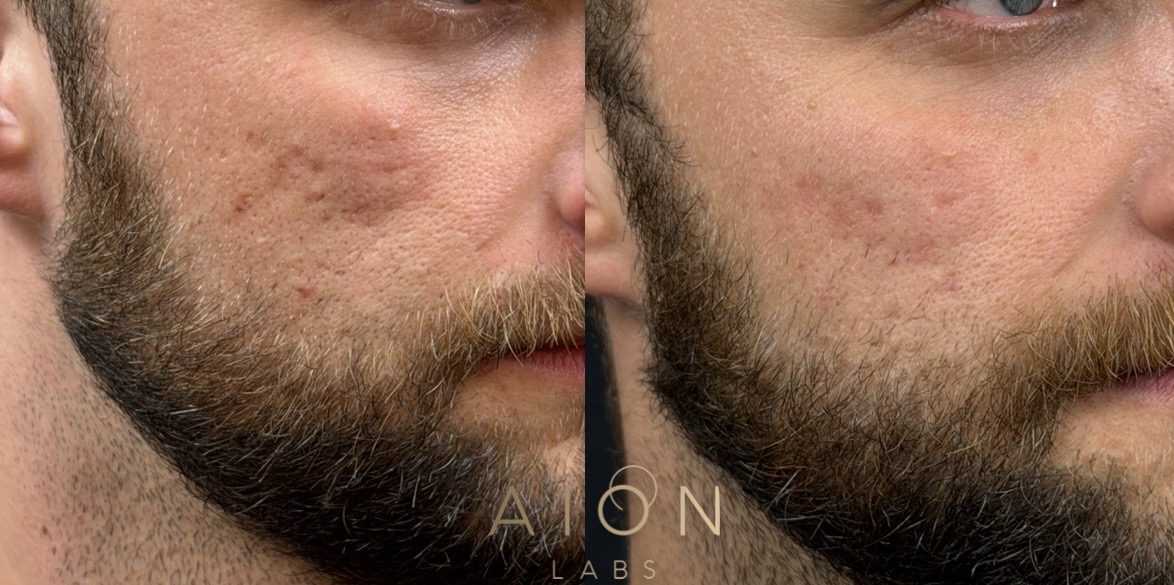
Depending on the patient this may involve regenerative injectables such as polynucleotides, biostimulatory treatments that drive collagen production and elastin remodelling, or laser resurfacing where the surface quality warrants it. The objective is dermal thickness and tissue health, not visible tightness.
Step two: tighten the envelope with Endolift
Once skin quality has improved, the question is how much of the laxity can be tightened. This is usually where I consider Endolift.
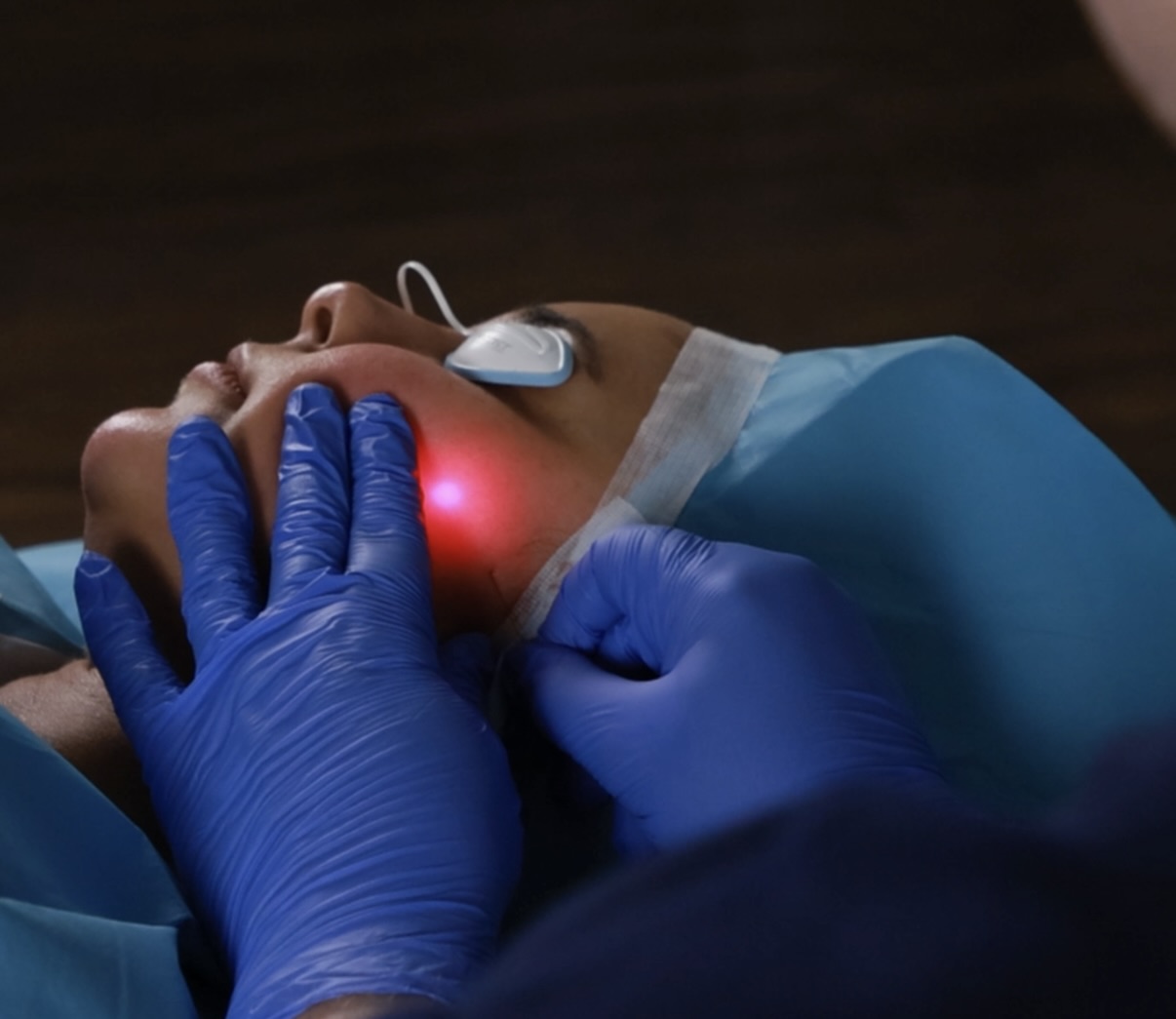
Endolift is a minimally invasive laser procedure performed through microfibres introduced under the skin, delivering energy directly into the subdermal plane. It is often described as a fat-reduction treatment, and it can reduce fat effectively in the right patient.
The post-weight-loss patient is not that patient. They do not want less facial fat; they feel they have lost too much already.
In these cases I use Endolift primarily as a tightening procedure rather than a debulking one. Adjusting the treatment parameters, fibre depth and technique shifts the emphasis towards collagen remodelling and soft tissue contraction while limiting further fat loss. Same device, materially different treatment. This is where detailed anatomical knowledge changes the outcome rather than just the conversation.
Step three: restore structure only where it is needed
I reassess the face once the skin has recovered and tightened, typically three to four months later. Only then do I decide whether volume needs replacing at all.
Many patients need considerably less than they expected. Where volume is appropriate, I restore deep structural support in selected anatomical planes rather than filling individual lines. Rebuilding part of the foundation produces a more natural result than filling the crease that appeared above it, and it usually requires less product.
Why a staged approach works better
Patients often ask whether this can all be done in one appointment. Occasionally it can. More often it should not be.
Collagen remodelling takes months. Skin tightening continues to develop long after the treatment day, and a face frequently looks different at four months than it did at four weeks. If I replace volume before I know how much the skin is capable of tightening, I will almost certainly add more filler than the patient needs, and removing it is far harder than adding it.
Staging lets each treatment declare its result before the next decision is made.
Does everyone who loses weight need treatment?
No. Patients with good skin elasticity and modest facial volume loss often need nothing. Patients who have always had slim faces frequently just need time for the skin to adapt. Some need tightening alone. Others need the full sequence of regenerative treatment, tightening and conservative structural restoration.
The plan should follow the anatomy in front of you, not a protocol.
Losing weight is worth doing, and no one should hesitate over it because of what might happen to their face. The work is in helping the face adapt so that it still looks like yours.
Frequently asked questions
Does Ozempic cause facial ageing?
No. Ozempic and other GLP-1 medications have no direct effect on facial skin or fat quality. The changes result from rapid loss of facial fat volume and occur after any comparable weight loss, including bariatric surgery and dieting.
Is Ozempic face permanent?
Skin laxity and deep fat loss do not reverse on their own, although skin retraction continues for several months after weight stabilises. Waiting three to six months before treatment is usually sensible.
Can Endolift help after GLP-1 weight loss?
Yes, when the primary problem is skin laxity. In post-weight-loss patients the technique should be adapted to prioritise tightening over fat reduction, which requires the practitioner to alter fibre depth and treatment parameters accordingly.
Should I stop taking my GLP-1 medication?
No. Facial changes are not a reason to stop a medication that is improving your metabolic health. Any decision about your prescription belongs with the doctor who issued it.
How long should I wait after weight loss before having treatment?
I generally advise waiting until weight has been stable for around three months, so that treatment is planned against a settled face rather than a moving one.
Book a consultation
The aim is not to make someone look younger than they are, but to restore harmony between the skin, the support beneath it, and the face you recognise. Consultations are available at Aion Labs in London.